Saturday, 15 August 2015

Some Indian Inventions over the years


Amazing Indian Inventions and Discoveries You Must Know

On the occasion of the Indian Independence Day, these are some of the Indian Discoveries and Inventions that you must know:
Plastic Surgery, Cataract Surgery: Cataract and Plastic surgery was known to the Indian physician Sushruta (6th century BCE). In India, cataract surgery was performed with a special tool called the Jabamukhi Salaka, a curved needle used to loosen the lens and push the cataract out of the field of vision. Their translated Arabic works made their way into Europe.Fiber Optics: Dr. Narinder Singh Kapany, is widely recognized as the ‘Father of Fiber Optics’ for his pioneering work in Fiber Optics technology. He was named as one of the 7 ‘Unsung Heroes’ by Fortune Magazine.
Snakes and ladders, and Chess: Snakes and ladders originated in India as a game based on morality. Later this game made its way to England, and was eventually introduced in the USA by Milton Bradley in 1943. Chess developed out of Chaturanga, which is an ancient strategy board game developed during the Gupta Empire in India around the 6th century AD.

Mysorean rockets: The first iron-cased and metal-cylinder rockets were developed by Tipu Sultan. After Tipu’s eventual defeat in the Fourth Anglo-Mysore War and the capture of the Mysore iron rockets, they were influential in British rocket development, inspiring the Congreve rocket, and were put into use in the Napoleonic Wars.

Flush Toilets: Flush toilets were first used in the Indus Valley Civilization. These existed in most homes and were connected to a sophisticated sewage mechanism. The civilization was prominent in hydraulic engineering.

Water on Moon: One of Independent India’s most notable contributions to space exploration occurred between 2008 and 2009, with Chandrayaan-1, the Indian Space Research Organization’s (ISRO) first dedicated lunar mission. “We want to thank ISRO for making the discovery possible. The moon till now was thought to be a very dry surface with lot of rocks.” Jim Green, NASA Director.
Shampoo: The word ‘Shampoo’ is derived from chāmpo (चाँपो). It was initially used as a head massage oil for the Nawabs of Bengal during the Mughal Empire around 1762. It evolved into shampoo over the years.

Complex Hydraulic Engineering: Since the time of the Indus Valley civilization over 5,000 years ago, India had created and sustained a vast and highly advanced network of canals, along with intricate irrigation, water management and sewage systems. These sewage systems were so advanced that they were designed to automatically self-clear systems blockages, as well as account for smell and odor.
Radio/Wireless Communication: The first public demonstration of the use of radio waves for communication, was made by an Indian scientist, Jagadish Chandra Bose. Bose first demonstrated the use of radio in Calcutta, in 1895, two years before a similar demonstration by Marconi in England. More than a century after the feat, Bose has been belatedly credited for his achievement.

Diamond mining and Zinc mining: Diamonds were first recognized and mined in central India, where significant alluvial deposits of the stone could then be found along the rivers Penner, Krishna and Godavari. Zinc was first smelted from zinc ore in India. Zinc mines of Zawar, near Udaipur, Rajasthan, were active during early Christian era.

http://fossbytes.com/indian-discovries-inventions-must-know/

Tuesday, 4 August 2015

Senji Fort (Gingee Fort)-The Fort with 1000 Year History

Senji Fort (Gingee Fort)
The Fort with 1000 Year History

The Gingee Fort happens to be one of the few surviving forts in Tamil Nadu. It is perched atop three hillocks namely, Rajagiri, Krishnagiri and Chandragiri that lies about 35 km from Thiruvannamalai. A huge rampart of 60 feet which can be described as ‘The Great Wall of India’ runs along the hillocks. Shivaji had called the Gingee Fort “the most impregnable fort in India”.


The Gingee Fort was the seat of power of the Pallavas from the 7 to the 9 century, the Cholas from the 10 to the 11 century and the Hoysalas in the 12 century. Much of the fortress was built when it came under the Vijayanagara rule at the fag end of the 14 century.

In its heyday, everybody fought hard to hold on to the Gingee Fort. Known as the “Troy of the East”, it changed hands many times. It was captured by Shivaji in 1677, besieged by Aurangazeb in 1691, came under the sway of the French in 1750 before slipping into the hands of the British in 1761.

Well planned

The Gingee Fort, which sprawls over 11 square kilometres, houses a Kalyana Mahal, a durbar hall, a 11-feet long cannon, a clock tower, a khazana, an armoury, a large pond which was used for bathing elephants, a granary, a few temples and a mosque. The fortress had an intricate system of plumbing (even the top of the fortress was well provided with continuous supply of water), the remnants of which can still be seen. An underground tunnel connects the Gingee Fort to a temple perched atop another hillock called Singavaram, about three kilometers away.

The Gingee Fort was well laid out, taking into consideration the possibilities of a protracted siege. To gain entry into the citadel one had to cross a chasm with the help of a small wooden draw bridge which was drawn only after getting a signal from the sentries posted on the watch tower.

A description of Gingee Fort would be incomplete without a mention of De Singh. He was a chieftain from Bundhelkand whose story is reminiscent of the story of Rana Pratap and his loyal horse. In 1714, he came to the Gingee Fort on learning about the death of his father. The latter had been made the ruler of the Gingee Fort by Aurangazeb in 1700. The Nawab of Arcot, however, wanted to bring the Gingee Fort under his rule. De Singh took on the powerful Nawab of Arcot. He was only 22, yet he fought valiantly until his last breath. His wife committed sati on the pyre of her husband. Even today ballads about his courage and valour are sung, in many parts of Tamil Nadu.

When you visit the Gingee Fort, you will feel yourself virtually transported to a bygone era.

http://www.thehindu.com/…/where-eagles-d…/article4619668.ece

History of Gingee Fort

To know about the Fort from Pre-historic time clear evidence were not available. With some of the collected details, historians framed the history of Gingee Fort.

Living Place of Jains :- B.C. to 6 A.D

In comparison with evidences available from other sources like the evidence of rock-cut inscription of Jain monk Chandranandhi, from the figures of twenty four Jaina Thirthankaras in Sinukadambur, from the figures of Jains ascetics in Thirunathar hill and from the evidences of rock-cut beds of Jains in the upper part of Krishnagiri hill and foot print on the hill top, Chakkildurgam (or) Sangilidurgam, historians strongly believe that Jains lived in Gingee from 200 B.C. in 500 A.D.

Gingee Under the Pallavas :- (600 A.D. to 900 A.D)

During the reign of the Pallavas a cave temple was excavated in the natural hill in Singapuram. They built a temple in Panamalai which is to the south of Gingee. In Mandagapattu, which is 17 kms, away from Gingee, a cave temple was excavated in a rock. A rock inscription portrays Pallava Mahendravarman (580 A.D. to 630 A.D.) as Vichitrachitha. We can conclude from these evidences that Gingee was once under the rule of Pallava kings and also the cave temples and rock inscriptions at Singavaram and Melacheri situated near Gingee tell about the Pallava regime in Gingee.

Gingee under the rule of Cholas :- (900 A.D. - 1103 A.D)

From the rock-cut inscriptions in Aanangur, East of Gingee, it is known that after the decline of the Pallava kings, Gingee was under the contrl of Adita Chola (871 A.D. - 907 A.D.) Then during the reign of Adita Cola II and his broter Rajaraja Cola I (985 A.D- 1014 A.D.) it was called "Singapuranadu". From these evidences we come to know that Gingee was under the rule of the Cholas.

Gingee under the rule of Later Pandya, Pallava and Hoysalas :- (1014 A.D. - 1190 A.D)

From the Book ""Karnataka Rajakkal Savistara Charitham" British Historian Mecans says that after the rule of the Cholas, Gingee came under the supermacy of Pandya, Pallava and Hoysalas.

Gingee under Konar Heritage : -(1190 A.D. - 1330 A.D)

Gingee was under the sway of chieftains, Anandha Koan, Krishna Koan and Pullia Koan even though there was no epigraphical evidences from Koan rule but it is specified in some books. By foreign sources we come to know that Anandha Koan built "Anandha Giri" and afterwards it became "Raja Giri" His son Krishna Koan built "Krishna Giri"

Gingee under the rule of Vijayanagar Kings :- (1400 A.D)

From the survey of books that were present during Vijayanagar period, we come to know that Gingee was under the authority of Kopnnarayer during the 14th Century A.D.

Historians hold the opinion that Kopannarayr, one of the Generals of Vijayanagar empire helped Kampannarayan, with a large army. In return, Kampannarayan handed Gingee over to Kopannarayer.

Gingee under the Nayakka rulers : - (From the end of 14th century A.D. for 150 years)

During the peak of Krishna Deva Raya's power (1509 A.D. - 1529 A.D.) he ordered, Krisnappa Nayyaka to rule a region with Gingee as its capital. He and his successors ruled for about 150 years having capital at Gingee.

The Nayyaka rulers, build tall and strong fort walls with granite, tall towers with sculptural workmanship granite temples on the plains and brick shrines on the peak. This architecture is similar to that architecture in "Hampi"

Under the rule of Muhammaadans:-(1649 A.D. - 1677 A.D)

There was no unity among the Nayakas of Gingee, Tanjore and Madurai. There where frequent skirmishes among them.

Taking advantage of this situation, the Bijapur Sultans, who belong to the Muhammadans dynasty, invaded Gingee at the beginning of the 16th Century A.D. and captured it. After this the army general of "Golgonda" , "Mirjeeva" defeated Krishnappa Nayyaka and handed Gingee over the king of Bijapur.

Gingee under the Marathas:- (1677 A.D. - 1697 A.D)

After the fall of the Muhammadans rule at the end of the 17th century, Chattrapathi Shivaji, a scion in the annuls of History wrested Gingee from the Muhammadans. Then he asked his brother " Sambaji" to rule Gingee in 1690 A.D. afterwards it was handed over to Rajaram in 1697 A.D.

Gingee, under the rule of the Mughals:- (1700 A.D-1750 A.D)

The Mughal General Zulfigar Khan (1697 A.D. - 1698 A.D.) captured Gingee fort after a tough fight against the Marathas.

Zulfigar Khan, then handed over the rule to Swaroop singh who was the army head at Bundalakand in 1700 A.D. on conditions that he had to collect tax under the supervision of Sad-ad-ullah khan of Carnatic.

After the death of Swaroop, his son Desingh Raja came to the throne. He hated to be a slave to the Mugal rulers and refused to pay the tax to the Nawab. So a war took place between Sad-ad-ullah khan and Desingh Raja. At the end of the war, Desingh Raja by killing himself made a supreme sacrifice to avoid being a prisioner in the hands of Mogul rulers. Historians say that though Desingh Raja ruled for short period, he deeply engraved his marks in the history of Gingee. His wife also throwing herself into fire committed suicide to safeguard her chastity which is considered as highly holy.

After the death of Desingh Raja, Sad-ad-Ullah khan conquered Gingee in 1714 A.D. and ruled till 1750 A.D. for about 36 years.

Gingee under the rule of the Foreigners :- (1750 A.D)

French people who came to India, for the purpose of trade and commerce, attacked Gingee under the command of "Puli" and his troops, captured Gingee and kept Gingee under their control for about ten years. During this period French People annexed Vandavasi in 1760 A.D. and Pondicherry in 1761 A.D. Then the Britishers under the command of General "Coot" attacked the French Army on April, 1761 A.D. by winning the war, they brought Gingee under the control of the British Captain 'Stephen Smith'.

After this time. the General of Mysore, Hyder Ali became the king in 1761 A.D. A.D. As Hyder Ali did not like the British rule in India, he waged war against the British many times. So the Britishers made peace treaty with Hyder Ali. After few years, when Warren Hastings became the Governor General of India, Hyder Ali blamed Britishers for going against the treaty and waged war in 1780, by moving his troops via Polur and Vandavasi to caputure Gingee. But he was defeated by the Britsh army.

After 1780 A.D., the southern parts gradually fell into the hands of the British without any opposition. Due to the political changes in Carnatic area, the Britishers made Chennai fort for the transport facilities and the French made Pondicherry as their capital and started to rule Indian territory.

In the beginning, Gingee was the place of the Jains but later due to rule of Pallava, Chola kings, Pandya, Hoysalas, Vijayanagara kings. Muhammadans, Mughals and the indifferent attitude of foreigners, the Gingee fort, which was surrounded by the granite walls, the mandapas, the temples inside the fort, was gradually destroyed. The Britishers did not take any steps to renovate the fort. Today Gingee fort is placed as a memorial in the pages of history and also for the sake of its admirers.

http://www.gingeefort.com/History_conti.asp


The Fort with 1000 Year History - N.Nandhivarman - General Secretary Dravida Peravai

http://tamilnation.co/heritage/071111nandhivarnan_fort.htm


Sunday, 2 August 2015

12 Lesser Known Instruments from India’s Rich Musical History

12 Lesser Known Instruments from India’s Rich Musical History
- See more at: http://www.thebetterindia.com/26502/indian-musical-instruments/#sthash.zlG3MqPB.dpuf

Are you an ardent fan of Indian music and its incredible history? Then these 12 lesser known musical instruments from the past will make your day. 
​India has a rich musical history which is imbued with diversity in terms of forms, styles, kinds of instruments used, the way they are played, and more. While some of these forms and instruments made their way to the present and got their share of mainstream fame quite successfully, there are others which could not cross that line between then and now. These are instruments with equally interesting background stories and factual associations. Call it sheer luck, but they just could not enter the mainstream. Here are some lesser known yet intriguing musical instruments that are as much a part of the Indian musical scene as any other famous instrument today.

1. Ravanahatha

481
Source: URSONGS
This is a bowed string instrument and it is believed that it was first played, or built, by the Hela community in the times of King Ravana. The bowl of the instrument is made of a cut coconut shell that is covered with goat hide. A stick, commonly called dandi, made from Bamboo, is attached to the shell. There are two principal strings – one is made of steel and the other is made from horsehair. There are jingle bells attached along the long bow as well. The instrument has seen royal treatment through history and according to mythology, it was supposedly brought to North India by Lord Hanuman after the victory of Rama. It is still played in some parts of Rajasthan and is a part of the folk music there.

2. Yazh

Yazh
Source: Wikimedia
It is a plucked string instrument and is an ancestor of the modern day Veena. Named so because it was carved in the head of the mythological creature, Yali, the earliest mention of Yazh is in the works of poet Thirukurral, in 200 BC. There are many types of Yazh, differing in the number of strings and the shape (bow, peacock, etc.).

3. Sursingar

Rahmat_Khan
Source: Wikipedia
The name of this instrument literally means ‘Embellishment of Melody‘. It is described as a lute-derived sarod, but it is larger and produces a much deeper sound. The main body is made from wood or leather depending on the historical time of creation.

4. Gubguba

Khamak01
A Khamak
Source: smtagorecentre
It is classified as a percussion string instrument. At first glance, it looks a lot like a tiny tabla, but a second glance will tell you otherwise. It consists of a dried gourd through which a gut string is attached. This instrument has ten different names and some other versions of it, like the Bengali Khamak, which also has two strings.

5. Pepa

pepa
Source: Wikipedia
A single reed instrument, it is usually made from a very short stem and is packed at the end with the horn of a buffalo. It has become difficult to find a Pepa today even though it is a significant part of Assam’s culture, since the buffalo population has been receding in the state. Earlier a household feature, the Pepa is now being sold at a price of above two thousand rupees. It is often compared to a flute.

6. Kuzhal

Kuzhal Pattu
Source: YouTube
Kuzhal is a temple musical instrument from the state of Kerala. A double reed musical instrument, the Kuzhal is supposed to have a very shrill and penetrating sound. It is often compared to a nadaswaram and at times gets mistaken for a large shehnai.

7. Algoze

algoza
Source: Shelbyshore
The instrument is widely used in Rajasthani, Baloch and Punjabi music, especially in the genres of Jugni, Jind Mahi and Mirza. It is often used by Sindhi musicians as well and notable names including Late Ustad Khamiso Khan. Played by keeping three fingers on each side of the reed and by breathing into it, the Algoze has also gained momentum in the UK to cater to Punjabi listeners.

8. Gogana

250px-গগণা
Source: Wikipedia
The name would be more familiar to nature enthusiasts as Gogan is a fairly well known genus of moths. It is also a musical instrument, indigenous to Assam and is used in Bihu music. It is usually made of bamboo or a horn.

9. Pakhavaj

Pakhavaj
Source: Wikimedia
A barrel-shaped, two-headed drum, this is most likely a descendant of the more familiar Mridang. The tone it produces is rich in harmonics, being very low and mellow. It differs from the tabla in playing technique and from the Mridang in terms of construction.

10. Padayani Thappu

Hand-thappu
Source: Wikipedia
This is a frame drum and consists of a wooden rim which is covered by leather on one side. The drum is played with hands and not sticks. The instrument is a part of devotional practices.

 11. Udukai

Udukai
Source: Wikimedia
If you have ever ventured inside a Shiva temple, you have probably seen this one. The small ‘Damru’ of Shiva is not supposed to be a ‘damru’, but an Udukai. It is indigenous to Tamil Nadu and is widely used in prayers and other devotional practices. It is a hand drum and comes under the category of membranophone instruments. Resembling an hourglass, its pitch can be modified if one tightens the string in the middle.

12. Sambal

sambal
Source: Chandrakantha.com
The name almost sounds like a popular type of food in South India, but it is also a musical instrument from Western India and is a part of their folk music ensemble. The entire Sambal constitutes of 2 drums with different pitches and mostly different sizes; their respective sticks are also different at the mouth.
- See more at: http://www.thebetterindia.com/26502/indian-musical-instruments/#sthash.hoWWW1yV.dpuf

Tuesday, 12 May 2015

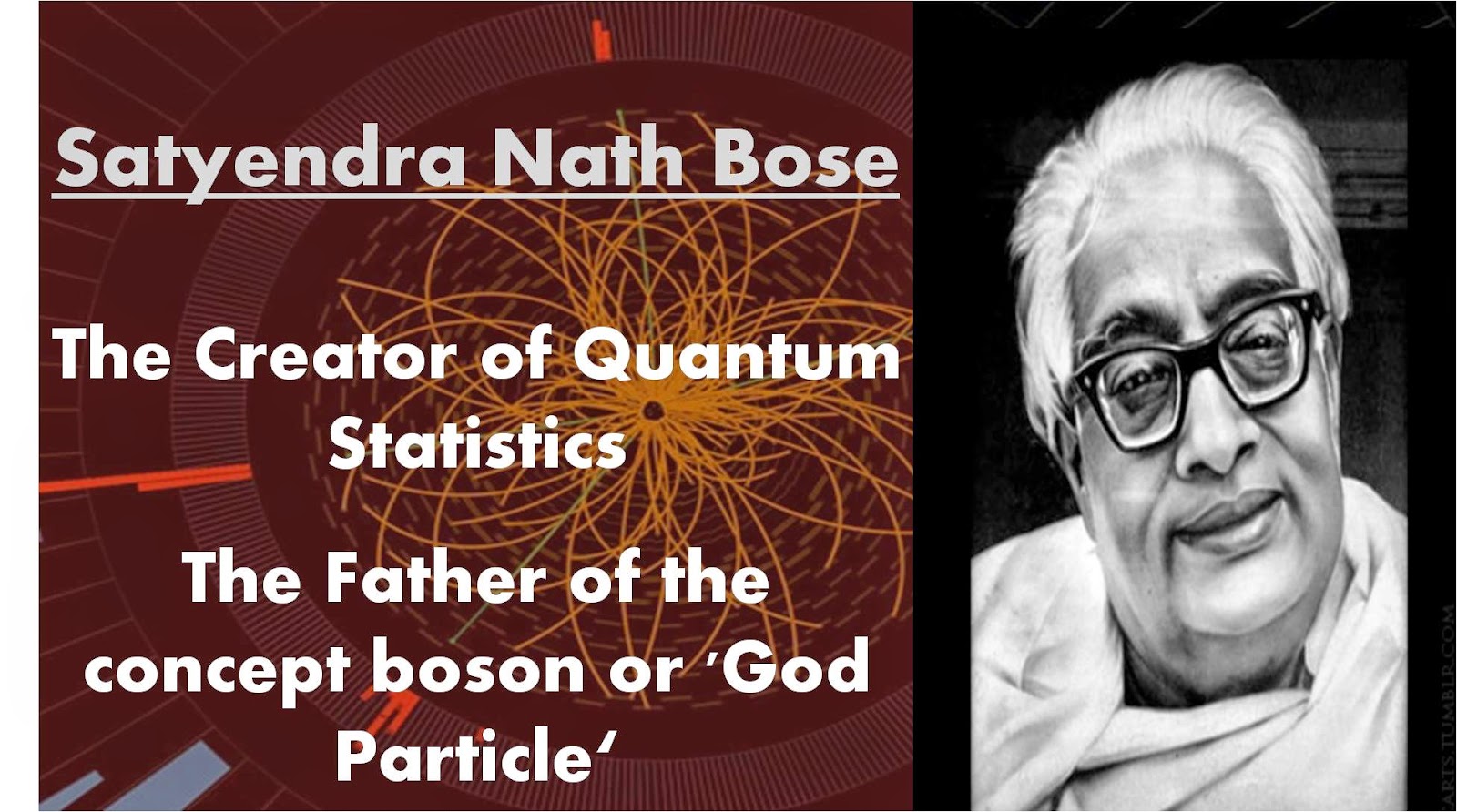
‪‎Satyendranath Bose


‪‎Satyendranath Bose‬ was born on January 1, 1894, in Calcutta. Young Satyendranath attended a neighbourhood elementary school in Calcutta. In 1907, he joined the Hindu School. His intelligence and memory were sharp. He was deeply interested in science right from school days. After passing high school in 1909, Satyendranath entered the Presidency College. He recalled the period of his stay in Presidency College as the Golden Age. It was here that the company of good friends and classmates and the guidance of illustrious teachers shaped his future. 

Some of the most renowned scientists, ‪Meghnad Saha‬, ‪NikhilranjanBose‬, ‪JCGhosh‬, ‪JNMukherjee‬ and ‪Girijapathi Bhattacharya‬, were his classmates. He had as his teachers eminent scientists like ‪JCBose‬, ‪PCRay‬ and ‪SNMaitra‬. Satyendranath not only shared the excitement of acquiring scientific knowledge in the midst of illustrious company but also imbibed patriotic fervour from the Swadeshi movement, which was at its height.

Bose took his B.Sc. examination in 1913 and the M.Sc. degree in 1915 from the Calcutta University, standing first in both. It was around this time that Sir Asutosh Mookerjee laid the foundation of the University College of Science for postgraduate studies and research. In 1915, some of those who had secured the masters degree approached ‪SirAsutosh Mookerjee‬ and requested him to open postgraduate courses in modern physics and modern mathematics in Calcutta University and allow them to teach. Among them were Meghnad Saha, Jnanachandra Ghosh, and Satyendranath Bose. In 1916, the University started M.Sc. classes in modern mathematics and modern physics. M.N. Saha, J. C. Ghosh and S. N. Bose were all appointed lecturers.

Bose began to learn French and German in order to read the European scientific literature. But because of World War I, it was difficult to order books from abroad. Bose and Saha then approached P. J. Bruhl, an instructor in the Bengal Engineering
College, who possessed advanced textbooks on physics. After reading up on the developments in new physics, they took over the task of teaching postgraduate students and even began to teach relativity to their students, not attempted till then. Within a few years the ‪Calcutta University‬ became recognized as the leading institution for higher learning in the sciences.

After five years at the Calcutta University, Bose moved to Dacca University in 1921. It was around this time that his friend D. M. Bose returned from Berlin and brought with him new publications on the quantum theory. He gave Plancks Thermodynamik und Warmestrahlung (Thermodynamics and Heat) to Bose to read. The book contained all the original papers of the great physicist. Bose started working on the equations and formulae himself.

Satyendranath Bose along with Meghnad Saha, established modern theoretical physics in India. Bose made significant advances in statistical mechanics and quantum statistics, the description of all forces by a single field theory, x-ray diffraction and the interaction of electromagnetic waves with the ionosphere. In 1924 Bose derived Planck’s blackbody radiation law without the use of classical electrodynamics as Max Karl Ernst Ludwig Planck (1854-1947) himself had done.

Bose found that Planck had assumed some hypothesis and calculated an equation approximately. Bose worked out a better way to calculate the equation. He sent his four-page research paper, Plancks Law and Light Quantum Hypothesis, to an Indian journal and to several journals abroad. But all of them rejected it. In desperation Bose sent the paper to Einstein in 1924. Einstein was so impressed with the daring concept that he himself translated it into German and sent it for publication to a German journal, Zeitschrift fur Physik which published the paper in its August 1924 issue. Einstein also explained at length the significance of the subject matter of the paper and added a comment: An important forward step.

Bose’s original approach struck Einstein who later systematically adapted Bose’s approach in his own work and generalization of Bose’s work led to the system of statistical quantum mechanics, now known as‪ ‎Bose Einstein Statistics‬ which describes particles of integral spin, which may multiply occupy the same quantum state. Elementary particles, such as photons that obey Bose Statistics, are called ‘‪Bosons‬ thus ensuring a permanent name for Bose in science. Such particles are now known as “bosons” after the name of S. N. Bose. Of late,it has come to be known merely as ‪Bose Statistics‬.

Bose’s name has become part and parcel of modern physics. There is no other scientist whose name is so indissolubly linked with Einstein in all the textbooks of physics. ‘indeed Bose’s work stands out as one of the central columns supporting the edifice of modern physics’.

As Partha Ghose has stated, “Bose’s work stood at the transition between the `old quantum theory’ of Planck, Bohr and Einstein and the new quantum mechanics of Schrodinger, Heisenberg, Born, Dirac and others.”

Bose managed to get a two-year study leave and sailed for Europe from Bombay in September 1924. After a brief sojourn at Paris he reached Berlin where he eventually fulfilled his longcherished desire of meeting Einstein, whom he considered his guru. On his return to Dacca, Bose was appointed Professor of Physics in 1927. Bose was greatly loved and admired as a teacher by his students, and his colleagues held him in high
esteem. He was informal and kept his door always open to anyone who cared to drop in. His bedroom also served as his study.

Bose returned to Calcutta University in 1945 as Khaira Professor of Physics. During another visit to Europe in 1954, Bose had wanted to go to the United States to meet Einstein again. However, since he had happened to visit Russia earlier the Americans thought of him as a communist and did not give him a visa. Tragically, Einsteins death soon after, dashed Bose’s hope of meeting his guru again.

In 1954 the Government of India conferred the honour of Padma Vibhushan on him and Bose retired from Calcutta University in 1956. The University honoured him by appointing him Emeritus Professor. Later he became the Vice- Chancellor of the ‪Visvabharati University‬. In 1958, he was made a Fellow of the Royal Society, London.

Though Bose was primarily a scientist, he was equally interested in literature, art and music. He could read and enjoy poems in Sanskrit, Bengali, English, French and Italian. Bose had made a deep study of several works in Bengali and English literature and also translated some French short stories. Very few people know that Bose could play well on the bowstring musical instrument, ‪Esraj‬. A gifted musician and critic of music, he also created a few new ragas.

At a time when the majority of the Indian elite craved proficiency in English, Bose understood the importance of the Indian languages. He believed that if science is to be understood by laymen,it should be taught in the regional languages. He founded a science association named Bangiya Vijnana Parishad in Bengal in 1948 and all its correspondence was carried out in Bengali. From its inception, the association has been bringing out
a periodical entitled Jnan o’ Bijnan.

Within a few days of completing 80 years, Bose suffered a severe heart attack and breathed his last on February 4, 1974. Unfortunately in India Bose’s name is not so familiar. This is a reflection of sad state of indian science. To quote G. Venkataraman: “the name of Satyendranath Bose will live for ever in physics…unfortunately, most people in India have never heard of him. I would not be surprised if most of our scientists also do not know much about him, although they might have heard his name. Indeed, i am prepared to bet that barring a sprinkling of physicists (mostly theorists), many in our physics community too are ignorant about Bose. Even if they have heard of him, it is quite likely that they are not aware of the significance of his work.”

As S. D. Chatterjee has written, “With Professor Satyen Bose’s death an era ended—an era of great men who created science in India.” Bose was too precious for India. India has many scientists but it woefully lacks great scientists. In the Centenary Edition of Chambers Biographical Dictionary (1997), which has entries of over 17,500 detailed biographies, only the names of six scientists figure namely J. C. Bose. C. V. Raman, S. Ramanujan, S. N. Bose, M. N. Saha, and Homi J. Bhabha. In Cambridge Dictionary of Scientists (2002) this number is reduced to four, where J.C. Bose and H. J. Bhabha do not figure and in the Dictionary of Scientists of the Oxford University Press (1999) this number is five, where the name of Bhabha does not figure. So there are only four Indian scientists namely C. V. Raman, S. Ramanujan, S. N. Bose and M. N. Saha whose names figure in all the three publications mentioned above. Can we hope to add some few more names in these publications? Our younger generation has a lot to learn from the lives of our great scientists like S. N. Bose.

Today there is an institute at Kolkata named after Bose—the S. N. Bose National Centre for Basic Sciences.

Monday, 11 May 2015

Alasinga Perumal


Alasinga Perumal (1865—1909) was a propagator of Vedanta and an ardent supporter of Swami Vivekananda.

Around 1890—1891, he got the information of the upcoming Parliament of the World's Religions of 1893. Alasinga and his friends felt this could be a wonderful opportunity for them to present the ideals of Hinduism and Vedanta to the world. 

In December 1892 Vivekananda went to Madras and when Alasinga and his friends met him, they immediately felt that Vivekananda was the best candidate to represent India in the Parliament. He heard Vivekananda's lecture and felt that he was right candidate to represent them in Chicago. Alasinga met Vivekananda, they talked, shared their views, their opinions on Vedanta and their motherland and informed Vivekananda about their plans. Vivekananda agreed to visit America as a representative of India (Vivekananda had alerady been asked the same by the king of Mysore, the Raja of Ramnad and few other disciples).

After Vivekananda agreed to go to America, a committee was formed under the leadership of Alasinga to raise funds for the tour. The task of collecting money was difficult. Alasinga even went door to door in hopes of getting money; finally they gathered of ₹ 500.

In August 1893, Vivekananda informed Alasinga from America about the financial troubles he was facing at that time. After receiving this information, Alasinga borrowed ₹ 1000 from a merchant, and even sold his wife's gold ornament to collect money for Vivekananda.
Under inspiration of Swami Vivekananda, Alasinga with two other disciples of Vivekananda, Dr. M.C. Nanjunda Row and Venkataranga Raos, started publishing Brahmavadin, a journal on Hindu religion and Vedanta philosophy. The first issue of the journal was published on 14 September 1895 by the Brahmavadin Press. From 1909 to 1914, the publication of Brahmavadin became quite irregular. The last issue was brought out in 1914 (March–April). S

oon after, the Brahmavadin’s legacy was continued by a new journal, Vedanta Kesari, started by Sri Ramakrishna Math Chennai, and has been in circulation ever since.Soon after, the Brahmavadin’s legacy was continued by a new journal, Vedanta Kesari, started by Sri Ramakrishna Math Chennai, and has been in circulation ever since.

Sunday, 10 May 2015

Chinese Army once trained in India


World War II special: Did you know the Chinese Army once trained in India?

When the going got tough, Stilwell pulled back the troops into British India with the intention of training them

 Lt. Gen. Joseph W. Stilwell  inspecting Chinese troops in Ramgarh.
AdTech Ad
Lt. Gen. Joseph W. Stilwell inspecting Chinese troops in Ramgarh.
By: Web Desk | Updated: May 8, 2015 10:11 pm

It might now seem unthinkable, but there was a time when the Chinese Army actually trained on Indian soil, “somewhere in the north east”.
http://indianexpress.com/article/india/india-others/world-war-ii-special-did-you-know-the-chinese-army-once-trained-in-india/http://indianexpress.com/article/india/india-others/world-war-ii-special-did-you-know-the-chinese-army-once-trained-in-india/

With Japan conquering most of China, United States and Nationalist China came together to fight the Axis power. Generalissimo Chiang Kai-shek was the Allied Supreme Commander in the China Theater and he accepted President Roosevelt’s nominee Lt. Gen. Joseph W. Stilwell chief of staff of the combined forces.
But when the going got tough, Stilwell pulled back the troops into British India with the intention of training them.
In fact, as many as 20 Chinese divisions were trained in the US-run base of Ramgarh, now in Jharkhand, for a special campaign in Burma.

Swami Ramdev

Swami Ramdev: Facts we should know about

Swami Ramdev: Facts we should know about
29Apr 15
Written by
Published inYoga
Swami Ramdev is one of the most underrated humanitarian gurus that India has. His tremendous contribution to revival of Ayurveda and Yoga and making them household items, making healthy living accessible to all and sundry, has gone entirely uncelebrated. Here is an attempt at jotting down some of his major contributions to the nation, and humanity at large.

Swami Ramdev is a saint in truest sense, be it his living his benevolence towards mankind or his undying zeal to serve those in need. Moreover, he understood quite early that goodwill alone wont go too far- if he wants to serve the humanity, he as to establish a system that can sustain this spirit of service in the long run. In order to accomplish that he set up numerous organisations and establishments, on his hardwork and zeal alone. This lead to a massive revival of Ayurved and Yoga, something that was fading away from the land of Bharat.  
Here are a few of his works.
  1. He founded the Divya Yog Mandir Trust in 1995 and in 2003 Aastha TV began featuring him in its morn
    ing yoga slot. His yoga programme was immensely popular and till date he has taught Yoga to more than 100 Crore (1 Billion) people through Aastha TV channel reaching out to more than 200 countries of the world (that is 1 in every 7 people in the world). Of the total number, 20 Crore (200 Million) people have learnt yoga directly through thousands of camps across India, UK, USA, Australia, Japan and several other countries of the world. He has several celebrity followers, movie stars, leaders, policy makers and alike.
  2. He was the first non-Muslim to publicly address Muslim clerics at their seminary in Deoband. It is a city in Uttar Pradesh, where Dar-ul-Uloom - one of the most important and influential schools of Islamic Studies, is situated. Deoband, as a matter of fact, is the seat of global wahabism.
  3. Patanjali Yogpeeth is an institute founded for the promotion and practice of yoga and Ayurveda by Baba Ramdev. It has two Indian campuses, Patanjali Yogpeeth-I & Patanjali Yogpeeth-II, with locations in the UK, US, Nepal, Canada, and Mauritius.   Patanjali Yogpeeth in Haridwar, Uttarakhand, is the largest yoga institutes in India.
  4. Acharya Balkrishna, who is a close associate of Baba Ramdev, along with his co-authors have written a total of 41 research papers related to yoga and Ayurved.

    He has undertaken the project of developing the Ayurvedic system of medicines and research work and spreading the knowledge throughout the world. On October 23, 2004, he was honoured by former President   of India, Dr. A. P. J. Abdul Kalam at Rashtrapati Bhavan. In October, 2007 in the presence of Prime Minister, President and   cabinet ministers, he was honoured for his contribution in Yoga Ayurveda, Indian culture and his research in the field of Himalayan herbs. Acharya Balkrishan carried out research on more than 4000 herbs (the ancient shastras only state 600 herbs)   in Patanjali Research Foundation.
  5. To give a boost to the Swadeshi Movement (Make in India), Swami Ramdev set up Patanjali Ayurved Ltd. Just three years after its entry into FMCG sector, the company has a turnover of about 3000 Crores. It has more than 300 products out of which highfliers like DantKanti Toothpaste, Aarogya Biscuits and Coconut hair oil have overtaken the sales of established   MNC brands like Colgate, Britannia etc.
  6. Patanjali Chikitsalaya today gives free diagnosis and consultation to more than 200,000 patients daily through its more than 5000 nationwide centres. The biggest such effort anywhere in the world.
  7. Patanjali Food and Herbal Park, stated to be the biggest such food unit in the world, which was inaugurated by Mr Subodh   Kant Sahay, Union Minister for Food Processing Industry. The 500-crore park, set up by yoga guru Swami Ramdev, about 20 kms   from here, will provide direct employment to 7000 people. Swami Ramdev said his main objective was to provide remunerative   prices to the farmers for their produce of cereals, pulses and vegetables. It was a step from 'yog kranti to krishi kranti'   with an objective of prosperity for the farmers in particular and the people in general. The state –of – art manufacturing   facility meets the best manufacturing standards worldwide.
  8. Bharat Swabhiman, Baba Ramdev’s Cultural and Spiritual Organisation, with the goal of system change (Vyavastha Parivartan)   and Vishwa Guru Bharat (India – Best to lead the world ) Bharat Swabhiman and Yog Samiti are volunteer organizations functioning at grassroots level . Swadeshi Shiksha (education system based on Indian principles) and Swadeshi Chikitsa (medical system based on Indian principles) are two of the most important aims of this mission. Establishment of Hindi and all regional (Bhartiya-Indian) languages as the primary language in government-sponsored activities like education and the   judiciary is part of the agenda of this movement. Swami Ramdev draws attention to the fact that in terms of population Hindi   is the second most spoken native language after the Chinese language and yet in its own country it gets secondary status to   English. He also sees a problem in the fact that no modernized country in the world uses a foreign language for official purposes except India.
  9. With an active membership of more than Four Crore volunteers and a support base of close to sixty crores Swami Ramdev was   able to steer the election mandate in 2014 Lok Sabha (Parliament) and 2013- 2014 to State assemblies of Gujrat, Madhya Pradesh,   Chhattisgarh, Goa, Maharashtra, etc. 


    Fulfiling his promise of India without corrupt Congress regime.
  10. Swami Ramdev has addressed the International congregation of Cancer Specialists at Houston USA - In August 2009 Swami Ramdev addressed more than 700 Cancer specialists from all over the world at MD Anderson cancer centre USA. He was  honoured by the British House of Commons in July 2007. In January 2007 – Honorary Doctorate, by Kalinga Institute of    Industrial Technology, Bhubaneswar, in recognition of his efforts to popularise the Vedic system/science of Yoga.
  11. Swami Ramdev was slated to receive the Padma Vibhushan award, the second highest civilian award, on the occasion of 66th Republic Day in Jan 2015, but he humbly declined to accept it.
  12. In April 2015, Government of Haryana appointed Swami Ramdev as brand ambassador of Yoga and Ayurveda. He was given the status of Cabinet minister for Haryana but had declined it saying that he wanted to continue serving as a Baba.